
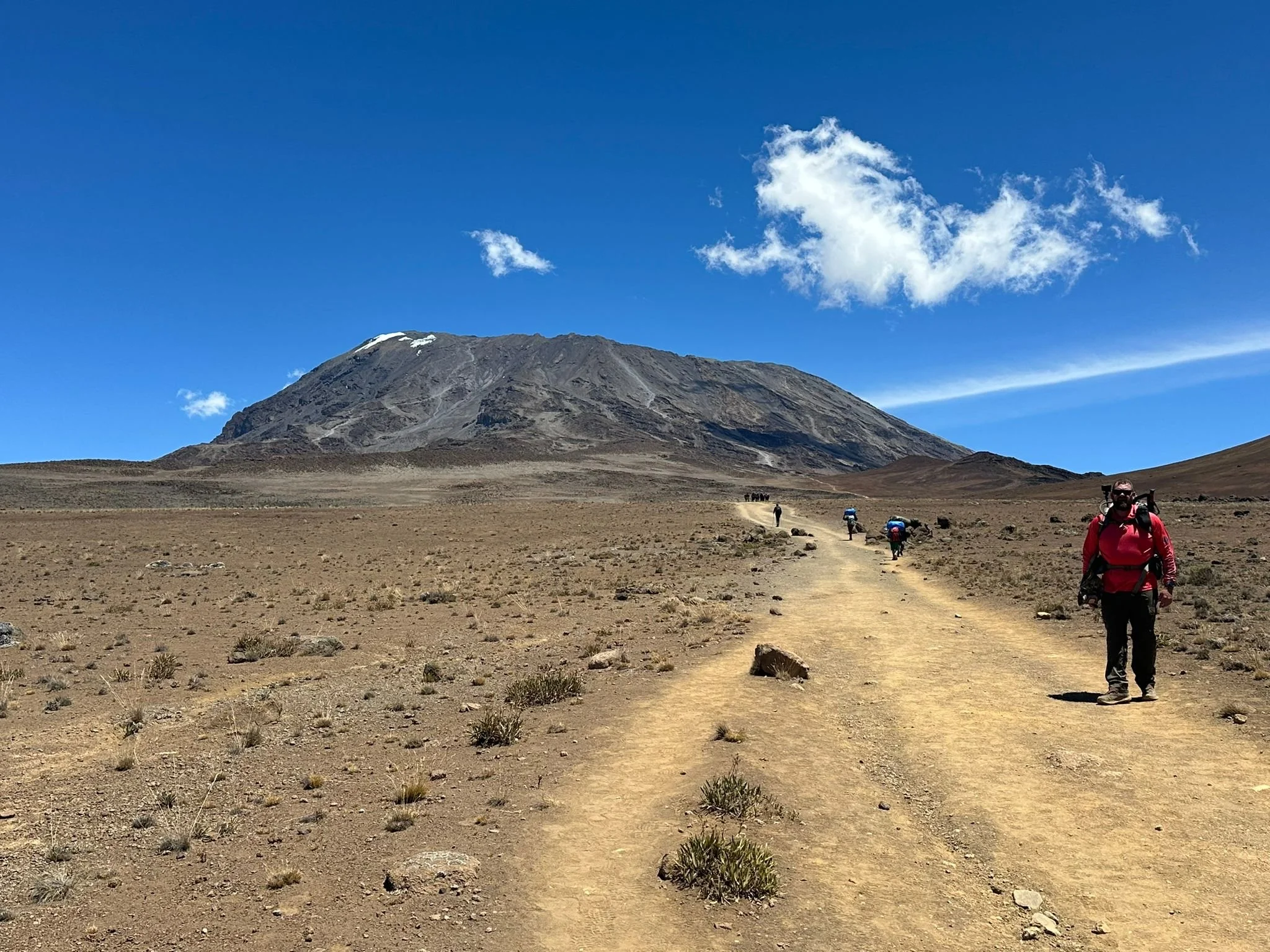
MOUNT KILIMANJARO · 5,895M · TANZANIA, AFRICA
The climb that changes
how you see yourself.
Most people who reach the summit of Kilimanjaro say the same thing when they get there: I didn't know I could do that. That moment is what we're here to help you find.
5,895m
Uhuru Peak — highest
point in Africa
4
Routes available — each with its own character
7–8
Days on the mountain for proper acclimatization
100%
Local guides & porters from surrounding communities
The most important phrase on the mountain:
"Pole pole" — Swahili for slowly, slowly. It is the philosophy behind every safe, successful climb. We live by it.
WHAT IT ACTUALLY MEANS TO CLIMB KILIMANJARO
This isn't for a
special kind of person.
It's for you.
Kilimanjaro is the highest mountain in Africa. At 5,895 meters, Uhuru Peak sits above the clouds, above the treeline, above almost everything — and reaching it on foot is one of the most meaningful things a person can do.
Our climbers are teachers, nurses, parents, and first-time travelers. People turning 40 or 50 and wanting to mark it with something real. People who've been through something hard and are ready to prove something to themselves.
Kilimanjaro is not a technical climb. There are no ropes, no ice axes, no mountaineering experience required. It is a long, beautiful, demanding trek — and with the right support, the right route, and the right pace, it is absolutely within reach.
CHOOSE YOUR ROUTE
Four paths to the summit.
We'll help you pick the right one.
Each route takes a different path with different scenery, difficulty levels, and acclimatization profiles. Not sure which is right for you? That's exactly what our planning conversation is for.
BEST FOR FIRST-TIMERS
8 DAYS • MODERATE • QUIETEST TRAIL
Lemosho Route
Starting at $2,400 USD per person
The best route on Kilimanjaro for first-time climbers. The longer approach from the west gives your body more time to adjust to altitude — which means higher summit success rates and a safer, less rushed experience.
Best for: First-time climbers, those wanting the highest success rate, and anyone who prefers fewer people on the trail.
You'll see: Remote western wilderness, the full Shira Plateau, sweeping panoramas across Tanzania and Kenya.
7 Days • Moderate • Quieter Trail
Rongai Route
Starting at $2,100 USD per person
The only route approaching from the north, near the Kenyan border. Quieter, drier, and offering a completely different perspective — including some of the best wildlife sightings of any route on the mountain.
Best for: Climbers who prefer a less-trafficked trail, those traveling during the rainy season, or anyone wanting a more remote experience.
You'll see: Open savanna on approach, unique northern face of the mountain, wildlife near the trailhead.
MOST POPULAR
7 DAYS • MODERATE - CHALLENGING
Machame Route
Starting at $2,100 USD per person
The most scenic route on the mountain. Visually stunning, passing through multiple climate zones. Its "climb high, sleep low" structure is excellent for acclimatization. The most loved route by returning climbers.
Best for: Climbers who want a scenic, well-established route. Good physical fitness is helpful — this route is demanding but rewarding.
You'll see: Lush rainforest, the Shira Plateau, Lava Tower, the Southern Icefields.
6 Days • Moderate • Hut Based
Marangu Route
Starting at $1,900 USD per person
The oldest established route and the only one with permanent sleeping huts, known as the “Coca-Cola Route.” A comfortable option for those who prefer huts over camping, with other routes offering different acclimatization and scenic experiences.
Best for: Climbers who prefer sleeping in huts, those on a tighter budget, or experienced trekkers who have been to altitude before.
You'll see: Rainforest, moorland, the Kibo Huts at 4,703m, the final crater rim approach.
Important Note: We focus on routes that give our clients the best chance of success—and the best experience on the mountain. There are additional routes on Kilimanjaro, including more technical or faster ascents. We’re happy to discuss these if you have prior high-altitude experience.
SAFETY & ACCLIMATIZATION
The length of your climb
is the most important
decision you'll make.
Altitude sickness is not a sign of weakness. It is a physiological response — your body reacting to thinner air and lower oxygen. It does not care how fit you are, how many mountains you've climbed, or how determined you feel. The only real defense against it is time.
This is why we do not offer shortened versions of our routes. You will see other companies advertising 5-day Machame or 5-day Marangu climbs. We do not offer them — not because we can't, but because we won't. The summit success rates on those itineraries are significantly lower, and the risk of altitude-related illness is meaningfully higher.
"We don't rush people up the mountain. We prepare them to reach the top."
This means choosing the right route, the right pace, and the right number of days — for you. There are no shortcuts worth taking at 5,895 meters.
Pulse oximeter monitoring
Every guide carries a pulse oximeter. We check oxygen saturation every morning and evening — and we act on what we find.
•
•
•
•
•
Supplemental oxygen on every climb
We carry supplemental oxygen as a precautionary measure on all routes, regardless of group size.
Wilderness first aid trained guides
All lead guides are trained in wilderness first aid and altitude medicine protocols.
"Climb high, sleep low" acclimatization
Our route selection prioritizes itineraries that allow your body to ascend during the day and recover at a lower elevation each night.
We make the call — always
If a guide believes a climber's safety is at risk, we descend. No exceptions. Summit success never outweighs your safety.
PRICING
Clear, honest pricing.
No surprises.
Route Days Starting at
Lemosho 8 days $2400
Machame 7 days $2100
Rongai 7 days $2100
Marangu 6 days $1900
Prices are per person and vary based on group size, season, and add-ons. Contact us for your specific quote.
Flexible payment plans available via WeTravel
A deposit holds your spot — you don't need to pay in full to get started. Ask us about current payment plan options.
WHAT'S INCLUDED
✓ All park and conservation fees (Kilimanjaro National Park)
✓ Licensed, professional guides and porters
✓ All meals on the mountain (breakfast, lunch, dinner, snacks)
✓ Camping equipment (tents, sleeping mats, dining tent)
✓ Group safety equipment — oxygen, pulse oximeter, first aid kit
✓ Pre- & post-climb accommodation (Chanya Lodge or Kilemakyaro)
✓ Airport transfers to/from Kilimanjaro International (JRO)
✓ Summit certificate
✓ All government taxes and levies
NOT INCLUDED
✕ International flights to/from Tanzania
✕ Travel insurance (required — must cover emergency evacuation)
✕ Personal climbing gear (we provide a full kit list)
✕ Gratuities for guides and porters (customary and appreciated)
✕ Optional add-ons: safari, Zanzibar extension, cultural tours
WHAT TO EXPECT
Honest answers to the questions
people are afraid to ask.
Do I need to be extremely fit?
No. You need to be in reasonable health and willing to prepare. Most of our clients are everyday people — not elite athletes. We recommend 8–12 weeks of preparation hiking and cardio before your climb. We have a team member to consult with, who trains climbers in the US or virtually to help you prepare.
What is a typical day on the mountain like?
You wake up to tea and breakfast brought to your tent. You hike for 4–8 hours, stopping often, moving slowly. You arrive at camp in the afternoon. Hot lunch, time to rest, hot dinner. In bed by 8pm. Every day is hard and every day is remarkable.
What if I get altitude sickness?
Altitude sickness affects many climbers to some degree — headaches, fatigue, mild nausea. These symptoms are normal at elevation and usually manageable. Our guides monitor every climber daily using pulse oximeters. Serious altitude illness is rare when the route is the right length.
What if I get altitude sickness?
Altitude sickness affects many climbers to some degree — headaches, fatigue, mild nausea. These symptoms are normal at elevation and usually manageable. Our guides monitor every climber daily using pulse oximeters. Serious altitude illness is rare when the route is the right length.
Will I make it?
We cannot promise that. The mountain has its own conditions, and your body will make decisions we cannot predict. What we can promise is this: we will give you every possible advantage — the right route, the right pace, the right support — and we will never give up on you before you give up on yourself.
READY WHEN YOU ARE
You don't need to have it all figured out.
The next step is just starting the conversation.
You don't need to have every answer figured out before you reach out. You just need one thing: the feeling that this is something you want to do. We'll help with everything else.
NO PRESSURE. NO CHECKOUT BUTTON. JUST A CONVERSATION